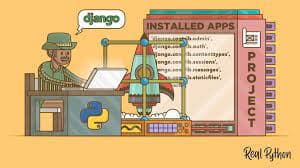
Common Mistakes to Avoid When Starting a Django Project

Django, a well-liked Python web framework, has gained popularity recently because of its ease of use, adaptability, and durability. As more professionals venture into Django projects, it is crucial to be aware of common mistakes that can hinder project success. This article will explore some key features to avoid when starting a Django project.
1. Securing the Admin Panel:
One of the first steps in Django project setup is to secure the admin panel. By default, the admin panel URL is well-known, making it vulnerable to unauthorised access. To enhance security, always hide the admin panel URL and limit access to staff members only. This can be achieved by customising the URL pattern or implementing additional authentication measures.
2. Implementing Robots.txt and Sitemap:
To ensure proper indexing by search engines, including a robots.txt file and a sitemap in a Django project is essential. The robots.txt file instructs web crawlers on which parts of the site they can access, while the sitemap provides a comprehensive list of URLs for search engine optimisation (SEO) purposes.
3. Customising Error Pages:
Error pages, such as the 404 (Page Not Found) and 500 (Internal Server Error), play a crucial role in user experience. Designing custom error pages that align with the project's branding helps improve user engagement and provides a professional look and feel. Django provides easy customisation options for error pages, allowing professionals to tailor them to match the project's design.
4. Implementing a Robust Authentication System:
User authentication is a fundamental aspect of any web application. Instead of reinventing the wheel, professionals can leverage Django's built-in authentication system or popular libraries like Django Axes. Django Axes provides features such as IP blocking, user lockouts, and brute-force attack protection, bolstering the security of the authentication system.
5. Monitoring User Activity and IP Tracking:
Implementing a user and IP monitoring system is recommended to track user behaviour and ensure the site's security. This enables professionals to identify suspicious activities, such as multiple login attempts from different IP addresses, and take appropriate measures to safeguard the application. Django provides hooks and middleware to implement such monitoring systems effectively.
6. Modularising the Project:
Django promotes a modular approach to development, encouraging professionals to break down their projects into smaller, reusable apps. This not only improves code organisation but also allows for better scalability and maintainability. By separating functionality into individual apps, professionals can easily manage and update specific features without affecting the entire project.
7. Writing Efficient Views and Minimising Django's Inbuilt Functions:
When writing code, including the views.py file, it is tempting to rely heavily on Django's inbuilt functions. However, using excessive inbuilt functions may limit the ability to leverage the full power of the Python language and customise the application. Strive to maximise the use of Python language constructs and libraries while minimising reliance on Django's inbuilt functions. This approach allows for greater flexibility, logic control, and code optimisation.
8. Creating Separate Apps for User Management and Search Functionality:
User management and search functionality are critical components of many web applications. To keep the codebase organised and make it easier to add improvements later, it is advisable to create separate apps for user management and search functionality. This approach helps isolate their respective logic, making it easier to test, debug, and modify these essential components independently.
Conclusion:
Starting a Django project can be an exciting journey, but it is essential to be mindful of common mistakes that can hinder progress. By securing the admin panel, implementing robots.txt and sitemap, customising error pages, establishing a robust authentication system, monitoring user activity, modularising the project, and optimising the code by minimising dependence on Django's inbuilt functions, professionals can lay a solid foundation for a Django application. Avoiding these pitfalls will not only enhance the security and user experience but also make the project more scalable and maintainable in the long run.
Happy coding, and may your Django projects flourish!